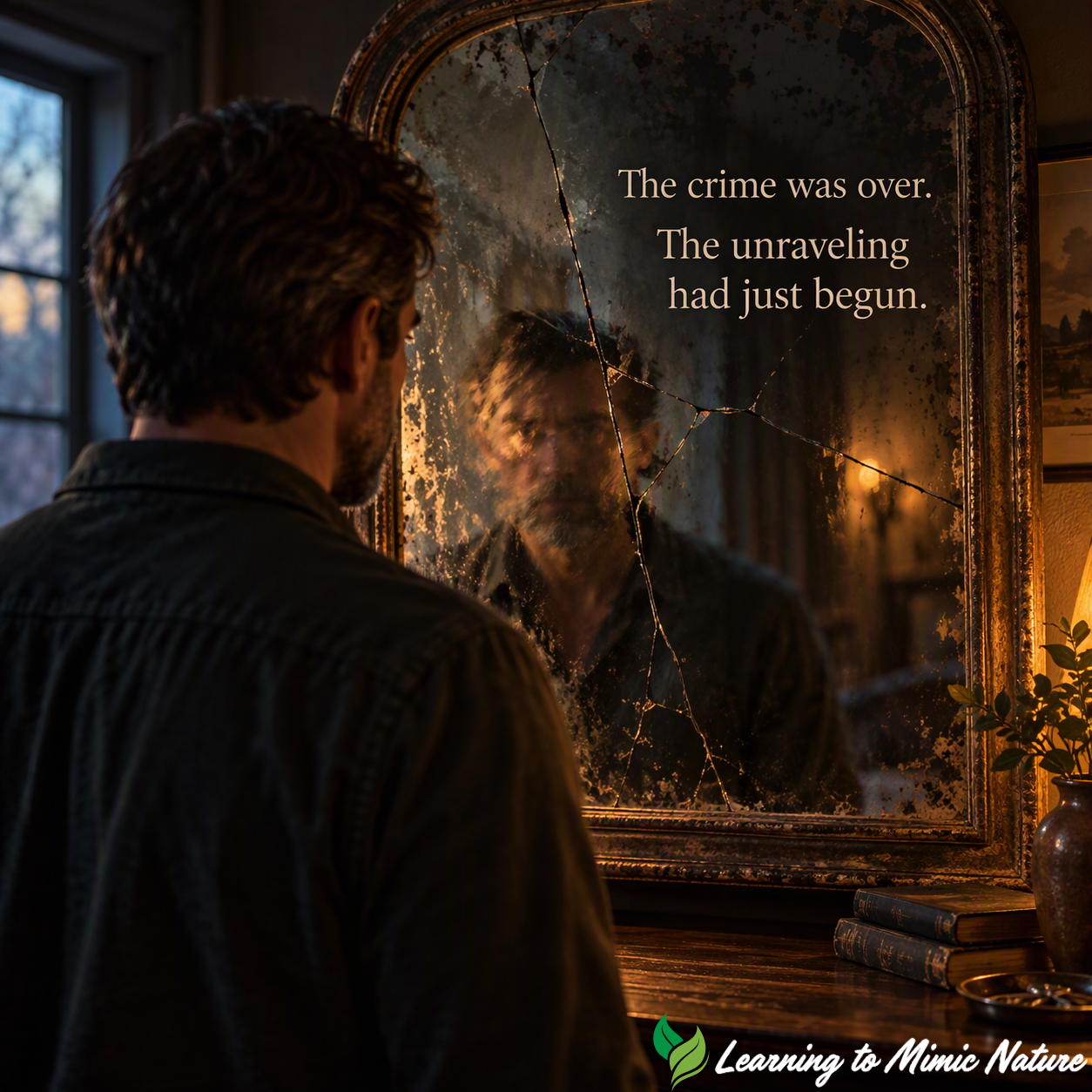
As I sit and wrestle with the ideas Dostoevsky presents in Crime and Punishment, I realize that we can sum up the chapters so far with the question of “How does a person talk themselves into doing something they know is wrong?” Now that Raskolnikov went through with the murder, the question must change. Now one must ask themselves, “What happens to the human mind after it crosses a line it was never meant to cross?”
Raskolnikov appears increasingly paranoid, suspicious, and emotionally unstable. He tortures himself with details and sees danger everywhere. At the police station, he swings between anger, defensiveness, fear, and desperation. Dostoevsky also repeatedly returns to the subject of his illness. Whether this sickness is physical, psychological, or spiritual, it seems impossible to separate it from the weight he is carrying.
One phrase that stood out to me was Dostoevsky’s description of an “empty heart.” Along with words like solitude and remoteness, Dostoevsky seems to be painting a picture of a man who is becoming increasingly disconnected from both other people and himself.
What I find fascinating is that Raskolnikov thought the greatest challenge would be committing the act. Instead, the real struggle seems to begin afterward. The crime is over, but the conflict within him has only intensified.
The farther Raskolnikov moves from truth, the harder he seems to work to avoid it. Yet the truth continues to surface through fear, sickness, isolation, and exhaustion. It makes me wonder if some burdens become heavier because we are spending so much energy trying to avoid facing them.
My question to you dear reader, can a person truly live at peace while running from the truth?