On this beautiful morning, I find my mind wandering back to Thoreau and his experience at Walden Pond. Remembering Thoreaus core point is to find meaning and “live deliberately,” the experiences he has and how he interprets them can be useful to our modern experiences in many ways.
The next section of my reading focused on Thoreau going into town and observing the people and their interactions with each other. He observed that people were consuming a lot of information through newspapers and gossip. He also observed that this constant consumption of all information was making them unable to think, feel, or react normally to life. Thoreau believed that this hinders their ability to wake up to deeper truths and understanding, which is fundamental to living deliberately.
Thoreau mentions the consequence of this by noting how the town reacted when strangers arrived. The imagery he used was that the stranger had to “walk the gauntlet.” When looking this term up, it means “to endure a severe, intimidating, or painful series of trials, obstacles, or attacks from multiple sides.” That is powerful imagery into how he saw people treating each other. It’s almost as if the act of not examining ourselves can focus attention on what is outside of us. When our attention is on others and their faults, we cannot see how our actions are creating or exacerbating things.
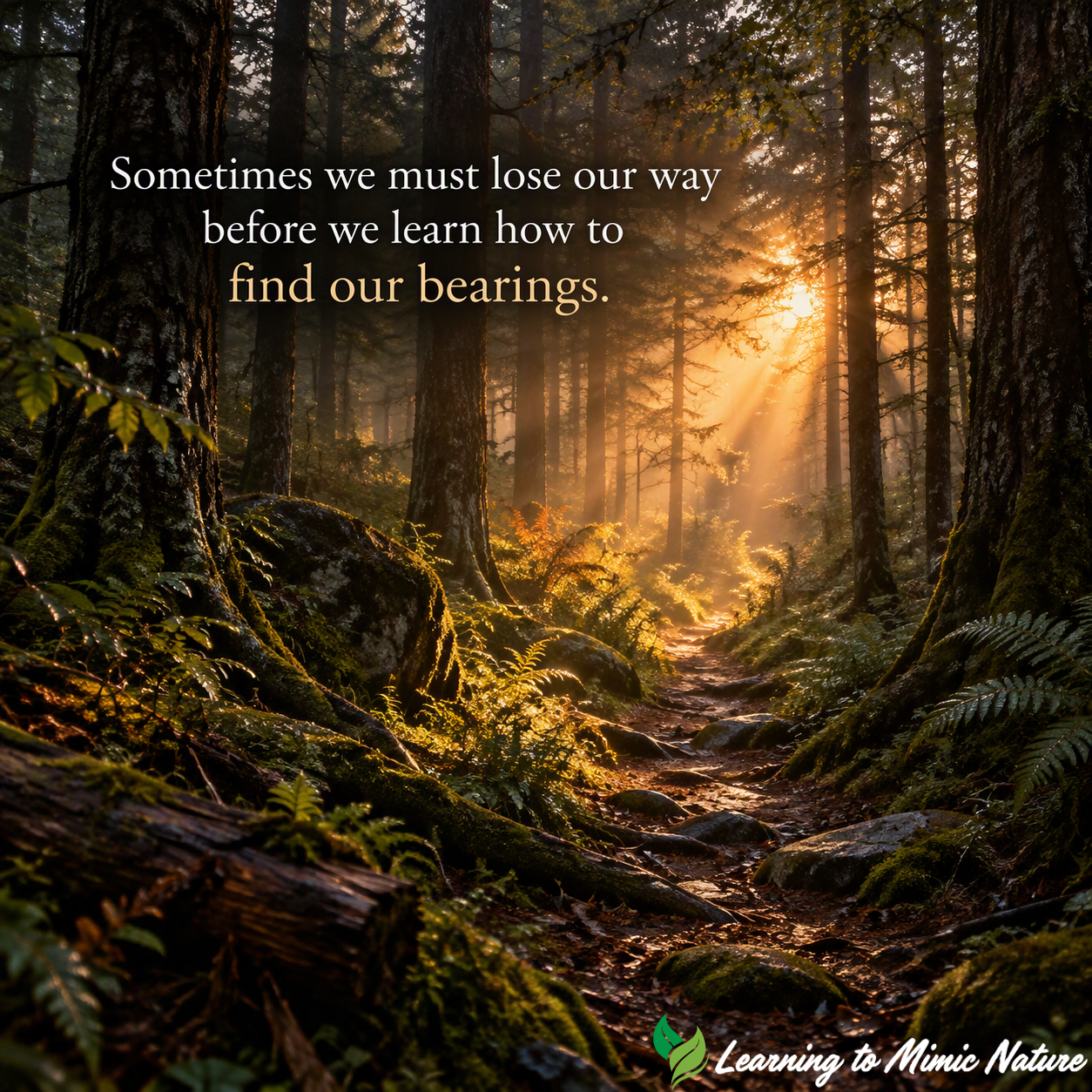
It’s interesting that Thoreau doesn’t stop with the observation. He offers a way for people to wake up and recognize what this constant distraction is doing to them. He writes about finding direction, but before we can find direction, we must first examine our compass.
Just as a compass can become misaligned and point us in the wrong direction, our values can gradually drift without us realizing it. Thoreau suggests that living deliberately requires us to pause, examine our bearings, and recalibrate ourselves to what is true. We must first recognize that we have drifted before we can begin moving in the right direction again.
Thoreau didn’t merely identify the problem. He encouraged people to wake up to it and take responsibility for their own course.
Reading this section, I couldn’t help but wonder how often I allow the noise around me to determine my direction. It is easy to become distracted by information, opinions, and the actions of others. It is much harder to pause, examine my compass, and ask whether I am still heading toward what is true.
Perhaps that is why Thoreau believed we must continually reorient ourselves. A life lived deliberately is not found by following the crowd. It is found by regularly stopping, taking our bearings, and choosing our direction again.