
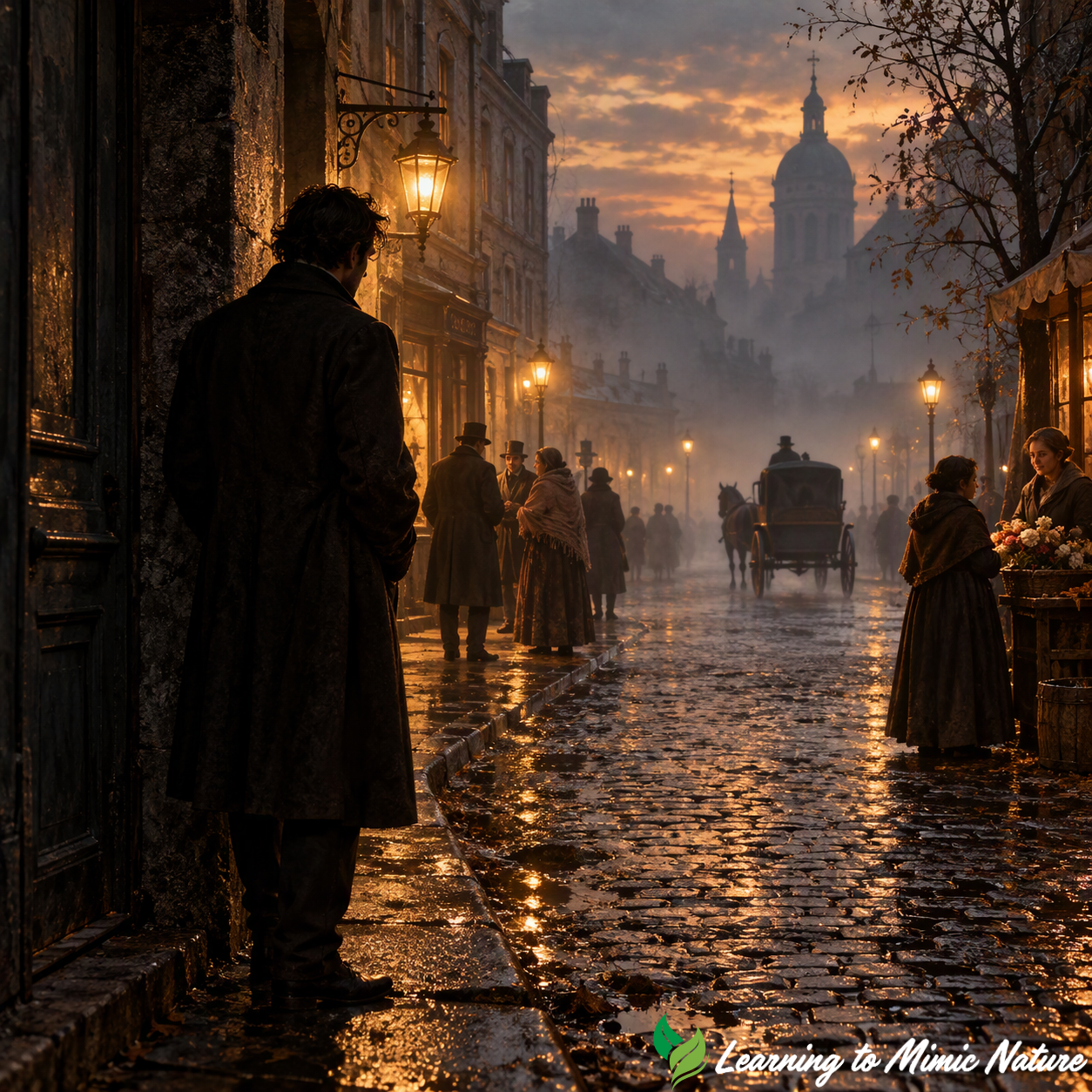
As I continue reading Crime and Punishment, one theme keeps appearing in different forms.
Early in the book, Raskolnikov dreams of a horse being beaten to death. What struck me about the dream was that it revealed something important about him: beneath all of his theories and intellectual arguments, he possesses compassion. The suffering of the horse horrified him.
After the murder, Dostoevsky repeatedly places Raskolnikov in front of human suffering. He witnesses desperation, poverty, violence, an attempted suicide, and now a man being struck by a cart.
When I read the scene with the cart, my mind immediately returned to the horse in the dream. While the events are different, they seem connected. It’s as though life keeps forcing Raskolnikov to confront the very thing he is trying to escape: his own humanity.
Throughout these chapters, Raskolnikov appears trapped between two competing realities. One reality is his theory that certain people can rise above ordinary morality. The other reality is the one he keeps encountering in the world around him: real people, real suffering, and a conscience that refuses to stay silent.
I find this interesting because many of us try to live through ideas, labels, or beliefs about ourselves. Yet life has a way of confronting us with reality. It reminds us who we are beneath the stories we tell ourselves.
Perhaps one of Dostoevsky’s deeper questions is this:
Can a person deny their humanity and still remain human?
Or does the truth eventually break through, no matter how hard we try to suppress it?