As I sit at my table looking out at the rainy morning scene, I begin thinking about Walden pond.
I was struck by Thoreau’s observation that most people search for meaning, peace, and happiness in external events. I’ll be happy when I get a raise. I’ll be happy when I have a family. We wait for promotions, relationships, achievements, and accomplishments to make us feel alive.
Meanwhile, the things that actually make us feel alive are already within reach.
The beauty of a morning sunrise. The cool breeze on a rainy summer day. The warmth of a crackling fire.
The opportunity for living life exists in this moment. Many people are simply too distracted to notice it.
Many never stop to consider how a beautiful sunrise or sunset quietly changes them. Instead, they are focused on to-do lists that need attention, deadlines that need to be met, and expectations that are not met.
Thoreau believed that the real cure to humanity’s ailments is nature. Just as his morning baths in Walden Pond became a ritual that reconnected him to life and the coming day, nature offers us something many desperately need: perspective, renewal, quiet, and presence.
Nature doesn’t remove our problems, it reconnects us to something larger than them. In doing so, it restores proportion to the things that trouble us.
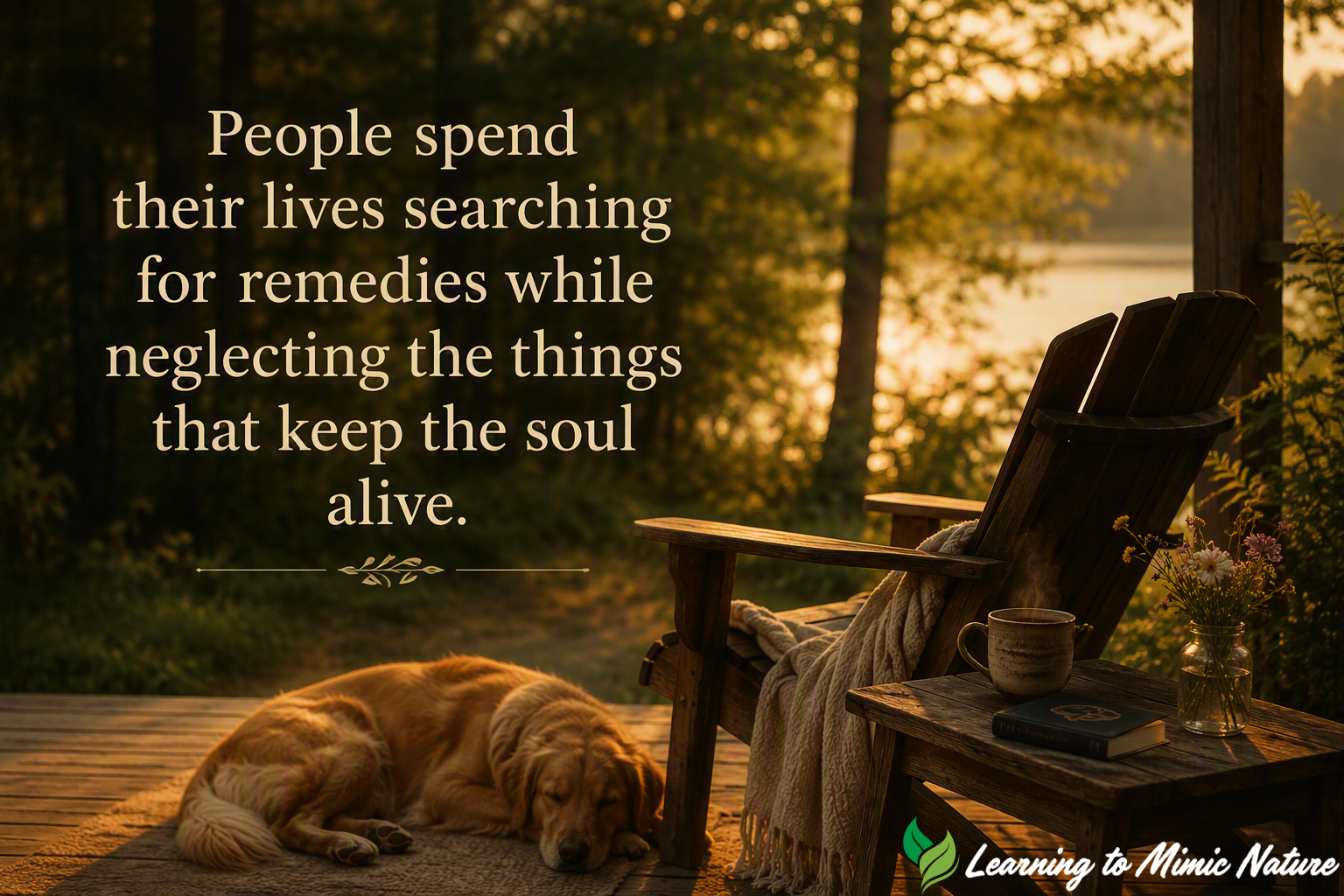
Thoreau believed that many people seek bottled solutions, quick fixes, and shortcuts while neglecting rest, fresh air, contemplation, and the simple rhythms of life that have sustained humanity for generations. Because Thoreau felt connected to this rhythm, he did not measure companionship merely by physical proximity.
He believed that solitude and loneliness are not the same thing. A person can feel profoundly lonely in the middle of a crowd. Physical nearness does not guarantee connection. The value of a person is not found in their proximity, but in their ability to understand and be understood. True connection comes from meeting others where they are and sharing in something deeper than mere presence.
Through his time at Walden Pond, Thoreau observed that very little burdened him. This does not mean he denied difficulty or hardship. Rather, he noticed the interconnectedness of everything around him. If one thing was lost, something else was nourished. When excessive rain damaged his seeds, it also strengthened the grass that would later benefit him in other ways.
Life, he realized, was larger than any single disappointment.
Perhaps that is why Thoreau believed that many of the things we spend our lives searching for are already near us. We chase remedies while overlooking the simple things in life.
All of this makes me question how I am interpreting my own life, and whether I need to change my perspective in some way.
I’d like to leave you with a question:
Have you been searching for remedies while overlooking the simple things that make you feel good?