Today, I once again found myself stepping into Raskolnikov’s world. Chapter 5 felt less like a story and more like a battle taking place inside his mind. One phrase that immediately caught my attention was Dostoevsky’s description of Raskolnikov searching for a “sinister significance” in his thoughts. It made me wonder if he was no longer simply thinking, but actively looking for a deeper meaning in the dark ideas he was wrestling with.
Another detail that stood out was the repeated use of the word “It.” The word is capitalized, almost as though it has become a name. Whatever “It” is, it is no longer just a passing thought. It has become something larger, something that occupies space in Raskolnikov’s mind.
Throughout the chapter, he seems trapped between wanting to escape “It” and being strangely drawn back to it. Dostoevsky describes an inner craving and turmoil that leaves Raskolnikov restless and unsettled. He appears unable to find peace because he cannot stop returning to the very thing that troubles him.
For a brief moment, nature seems to provide relief. As Raskolnikov leaves the city, the countryside becomes restful to his eyes. Yet that peace quickly fades. The turmoil within him proves stronger than the quiet beauty around him. The problem is not outside of him. The struggle is taking place within.
The chapter reaches its most disturbing moment in a dream about a horse. The dream is filled with violence, suffering, and helplessness. What struck me was not just what happened in the dream, but what it revealed about Raskolnikov himself. Beneath his bitterness and confusion, there still seems to be compassion. The dream exposes parts of his soul that his waking thoughts often conceal.
By the end of the chapter, Dostoevsky describes darkness and confusion within Raskolnikov’s soul. Even when he briefly experiences freedom from his troubling thoughts, the relief never lasts. The thought keeps returning.
As I reflected on this chapter, I couldn’t help but think about how powerful a single thought can become when we continually return to it. At some point, the question is no longer whether we have the thought, but whether the thought has us.
Perhaps the battle for our actions begins long before any action is ever taken.
I’d like to leave you with a question:
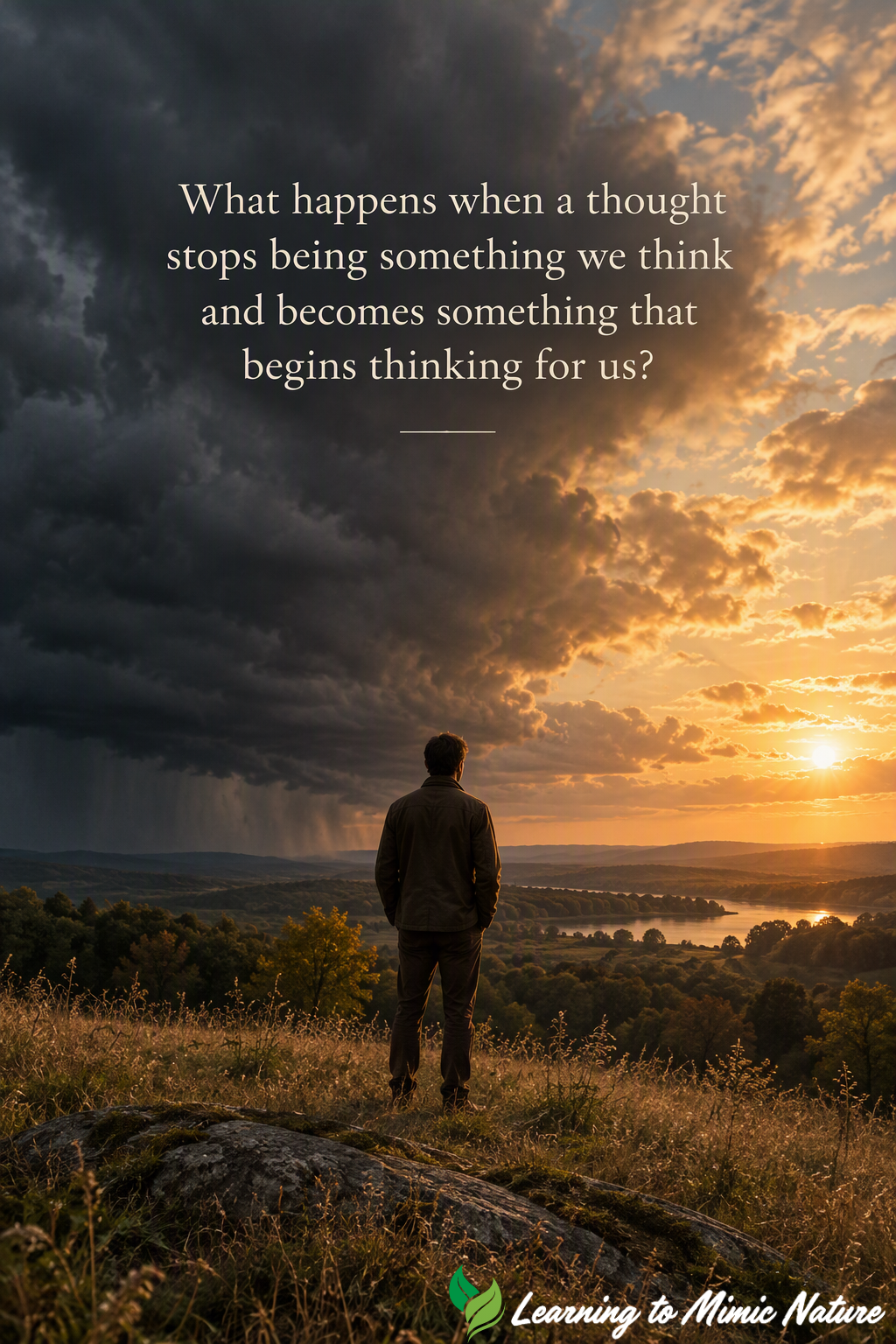
What happens when a thought stops being something we think and becomes a force that begins to think for us?